





VW Tiguan vs Kia Sportage: Denver Compact SUV Comparison
Last updated: May 20, 2026 | Service area: Denver, Colorado
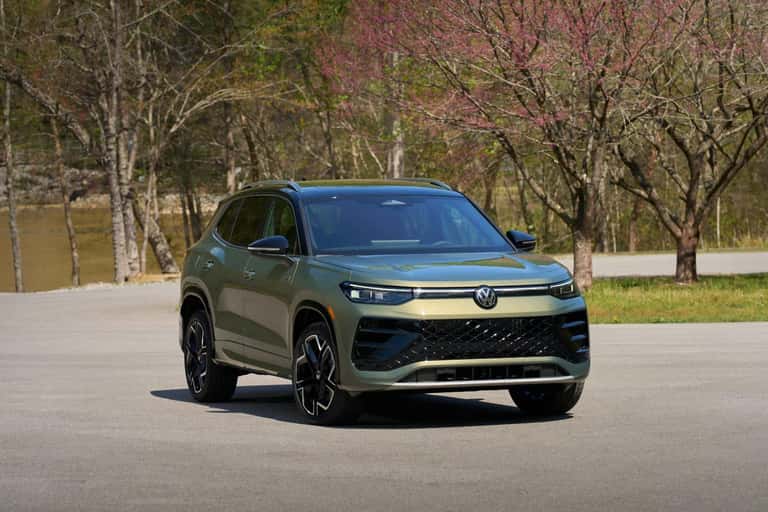
The VW Tiguan vs Kia Sportage comparison is one of the most popular cross-shops in the Denver compact SUV market right now. Both are five-passenger SUVs with 8-speed automatics, generous tech, and available all-wheel drive for Colorado winters. The difference is under the hood: the Tiguan runs a turbocharged engine that holds its power at altitude, while the Sportage relies on a naturally aspirated 2.5L that loses output as the elevation climbs. Here is how the 2026 Volkswagen Tiguan ($30,805 starting MSRP) and the 2026 Kia Sportage ($28,790 starting MSRP) actually compare when you put them on Denver roads.
Quick Answer
The 2026 VW Tiguan delivers a 201-hp turbocharged engine (up to 268 hp on the SEL R-Line Turbo), a 12.9-inch standard touchscreen, and VW’s 4MOTION AWD system starting at $30,805. The 2026 Kia Sportage counters with a lower $28,790 starting price, more cargo space (39.6 vs 33.8 cu ft behind the second row), and an industry-leading 10-year / 100,000-mile powertrain warranty. For Denver drivers who want turbocharged altitude performance, a larger touchscreen, and a more refined highway experience, the Tiguan is the stronger pick. Shoppers who prioritize cargo space, warranty length, and a lower entry price will find the Sportage compelling.
See the Tiguan in Person at Our Denver Showroom
Top-rated VW dealer in Denver. Best selection, best pricing, and the area’s most trusted Volkswagen sales and service team.
VW Tiguan vs Kia Sportage at a Glance
The Tiguan and Sportage sit in the same compact SUV segment and share some surface-level similarities — both seat five, both use 8-speed automatic transmissions, and both offer available AWD. But they take meaningfully different engineering approaches. Volkswagen builds the 2026 Tiguan on its MQB Evo platform with a turbocharged powertrain. Kia pairs the Sportage with a naturally aspirated 2.5L four-cylinder. In Denver, where altitude costs naturally aspirated engines roughly 15 to 20 percent of their sea-level output, that powertrain difference shows up the moment you merge onto I-25 or head west on I-70.
Below is a quick reference comparing the 2026 VW Tiguan and the 2026 Kia Sportage in the trims most Denver shoppers cross-shop. All specs are pulled from the manufacturers’ official 2026 model pages.
| Specification | 2026 VW Tiguan | 2026 Kia Sportage |
|---|---|---|
| Starting MSRP | $30,805 | $28,790 |
| Engine | 2.0L turbo I-4, 201 hp / 221 lb-ft (AWD) | 2.5L NA I-4, 187 hp / 178 lb-ft |
| Top Available Power | 268 hp / 258 lb-ft (SEL R-Line Turbo) | 187 hp / 178 lb-ft (single engine) |
| Transmission | 8-speed automatic | 8-speed automatic |
| AWD | 4MOTION available (+$1,500) | Available on LX/EX/SX Prestige; standard on X-Line & X-Pro Prestige |
| Fuel Economy (AWD) | 22 city / 30 hwy / 25 combined | 24 city / 30 hwy / 26 combined |
| Seating | 5 passengers | 5 passengers |
| Cargo (behind 2nd row / max) | 33.8 cu ft / 69.8 cu ft | 39.6 cu ft / 74.1 cu ft |
| Touchscreen | 12.9-inch standard (15-inch on SEL R-Line Turbo) | 12.3-inch standard |
| Bumper-to-Bumper Warranty | 4 years / 50,000 miles | 5 years / 60,000 miles |
| Powertrain Warranty | 5 years / 60,000 miles | 10 years / 100,000 miles |
| Wheelbase | 109.9 inches | 108.5 inches |
Performance and Powertrain
The 2026 Volkswagen Tiguan runs a 2.0L EA888 turbocharged four-cylinder making 201 horsepower and 221 lb-ft of torque in AWD form, paired with an 8-speed automatic. Step up to the SEL R-Line Turbo and output climbs to 268 hp and 258 lb-ft. A turbocharger forces air into the combustion chamber, so the Tiguan holds its rated power as you climb from Denver at 5,280 feet to the Eisenhower Tunnel at 11,158 feet. That is not a small detail when you are merging onto I-70 westbound with a loaded SUV.
The 2026 Kia Sportage uses a 2.5L naturally aspirated four-cylinder producing 187 horsepower at 6,100 rpm and 178 lb-ft of torque at 4,000 rpm, also paired with an 8-speed automatic. The Sportage’s transmission matches the Tiguan gear-for-gear, so shifting smoothness and efficiency are comparable between the two. Where they differ is aspiration: the Sportage’s naturally aspirated engine relies on ambient air pressure. At Denver’s altitude, that 187 hp drops to roughly 150 to 160 hp in real-world conditions. The Tiguan’s turbo does not suffer the same loss. On highway merges, loaded passes, and uphill grades, the turbo advantage is something Denver drivers feel every day.
It is worth noting that the Sportage Hybrid does offer a turbocharged powertrain, but that is a separate model with different pricing. The standard gasoline Sportage that most shoppers cross-shop against the Tiguan is naturally aspirated only.
AWD and Snow
VW’s 4MOTION all-wheel-drive system is available on Tiguan trims for an additional $1,500 and uses a multi-plate clutch that proactively routes torque front to rear. It is standard on the SEL R-Line Turbo. Kia offers AWD as an option on the LX, EX, and SX Prestige trims, and makes it standard on the X-Line and X-Pro Prestige. The Sportage AWD models gain a meaningful ground clearance bump — 8.3 inches versus 7.1 inches on FWD models — which is a genuine advantage on unpaved mountain roads and deep snow.
Both systems perform well in Colorado snow. The Tiguan with 4MOTION tends to feel more planted and composed at higher speeds on packed snow and icy highways. The Sportage’s higher ground clearance on AWD trims gives it an edge on unplowed streets and rougher terrain. For daily Denver commuting and weekend ski trips, both handle winter confidently.
Interior, Tech, and Daily Comfort
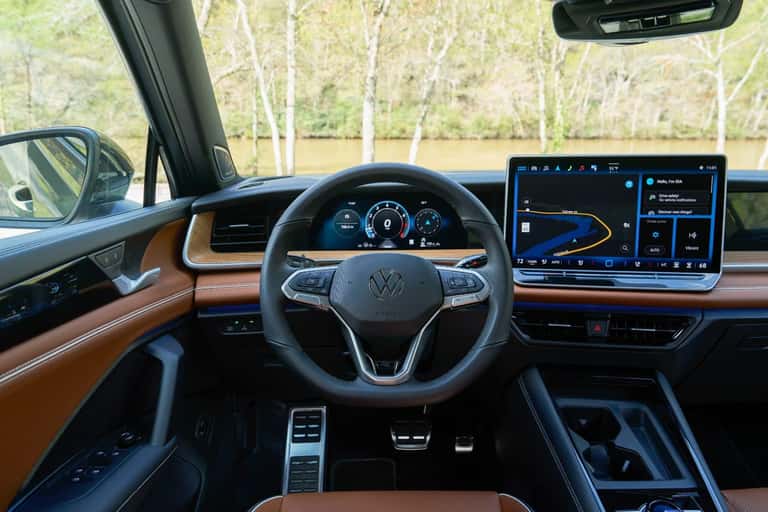
The Tiguan ships with a 12.9-inch touchscreen standard across the lineup, growing to 15 inches on the SEL R-Line Turbo. It also includes a 10.25-inch Digital Cockpit Pro gauge cluster standard on every trim, wireless Apple CarPlay and Android Auto, and VW’s latest infotainment software. The Sportage comes with a 12.3-inch touchscreen standard, paired with a 12.3-inch digital instrument cluster on higher trims (the LX uses a 12.3-inch display with an integrated 4.2-inch TFT). The Tiguan’s 0.6-inch screen advantage may sound small, but in a side-by-side comparison the larger display reads noticeably easier when navigating maps or managing media on the move.
Step inside back-to-back and the Tiguan’s cabin leans more toward quiet refinement — softer materials, more ambient lighting, and better noise isolation on the highway. The Sportage’s interior is well-designed with a modern, angular dashboard layout and quality materials that punch above its price point. Both cabins are well-built, but the Tiguan reads a half-step more upscale on texture and sound deadening, which matters on long I-70 drives to the ski resorts.
Safety and Driver Assistance
Both SUVs include comprehensive standard safety suites. Volkswagen’s IQ.DRIVE includes Travel Assist — a hands-on highway driving aid that combines adaptive cruise control with lane centering for smooth, fatigue-reducing highway commutes on I-25 and I-70. Travel Assist makes long-distance driving measurably less tiring, which matters for Denver commuters and weekend mountain travelers alike.
The Sportage does not brand its safety suite under a single name but includes a robust set of driver-assistance features: Forward Collision-Avoidance Assist, Smart Cruise Control with Stop and Go, Lane Keeping Assist, Lane Following Assist, and Highway Driving Assist among others. Both vehicles deliver strong standard safety equipment. The Tiguan’s Travel Assist system tends to feel smoother and more refined on the highway, with fewer unnecessary interventions — a difference you notice on long stretches of I-25 between Denver and Colorado Springs.
Cargo, Space, and Family Use
This is where the Sportage pulls ahead. The 2026 Kia Sportage offers 39.6 cubic feet behind the second row and 74.1 cubic feet with the rear seats folded. The 2026 Tiguan offers 33.8 cubic feet behind the second row and 69.8 cubic feet maximum. That is a 5.8 cubic-foot advantage for the Sportage with seats up and a 4.3 cubic-foot advantage with seats folded — roughly the difference of an extra large duffel bag or a set of ski boots.
For Denver families who regularly load gear for mountain weekends, the Sportage’s cargo advantage is real and worth acknowledging. If you routinely fill your cargo area to capacity — strollers, camping gear, ski equipment, Costco runs — the Sportage gives you more room to work with. Both are strict five-passenger SUVs with no third-row option. The Tiguan counters with a slightly longer wheelbase (109.9 vs 108.5 inches), which translates to marginally more rear-seat legroom for passengers.
Pricing, Value, and Warranty
The 2026 Kia Sportage starts at $28,790 — $2,015 less than the Tiguan’s $30,805 base. The Sportage also offers a wider trim range, topping out at the X-Pro Prestige at $39,690. The Tiguan’s trim walk runs from the S FWD at $30,805 to the SEL R-Line Turbo at the top of the lineup. For shoppers focused strictly on entry price, the Sportage wins clearly.
Where the Tiguan earns its premium is the turbocharged engine. At Denver altitude, the Tiguan’s turbo holds its full rated horsepower while the Sportage’s naturally aspirated 2.5L loses meaningful power. That $2,015 price gap buys you a turbo engine that actually performs as advertised in Colorado. Add the larger 12.9-inch standard touchscreen, the 10.25-inch Digital Cockpit Pro, and VW’s cabin refinement, and the Tiguan justifies its higher sticker for buyers who value those attributes.
On warranty, the Sportage wins decisively. Kia offers a 5-year / 60,000-mile bumper-to-bumper warranty and a 10-year / 100,000-mile powertrain warranty. Volkswagen offers 4 years / 50,000 miles bumper-to-bumper and 5 years / 60,000 miles powertrain. That is a significant difference — Kia gives you one extra year of bumper-to-bumper coverage and double the powertrain warranty length. In Colorado’s harsh climate, where freeze-thaw cycles, road salt, and potholes are hard on vehicles, that extra coverage has real financial value over the ownership period.
Common mistakes Denver shoppers make
- Comparing horsepower ratings at sea level without accounting for altitude — the Sportage’s 187 hp drops significantly at 5,280+ feet, while the Tiguan’s turbo holds its rated output.
- Assuming the standard Sportage has a turbo engine — only the Sportage Hybrid has a turbocharged powertrain. The gasoline model is naturally aspirated.
- Overlooking the warranty difference in the other direction — Kia’s 10-year / 100,000-mile powertrain warranty is twice the length of VW’s, which matters for long-term ownership costs.
- Ignoring cargo volume when you regularly haul gear — the Sportage offers 5.8 more cubic feet behind the second row, which adds up on ski weekends and family trips.
Top 6 Reasons to Choose the VW Tiguan
The Sportage wins on cargo, warranty, and entry price. The Tiguan’s case is built on engineering and daily driving advantages that matter specifically in Denver and Colorado.
1. Turbocharged power that holds at altitude
The Tiguan’s 2.0L turbo makes 201 hp at sea level and holds that output at Denver’s 5,280 feet. The Sportage’s naturally aspirated 2.5L makes 187 hp at sea level but loses 15 to 20 percent of that at altitude. On highway merges, mountain grades, and loaded I-70 climbs, the Tiguan delivers the power its spec sheet promises — the Sportage does not.
2. Available 268-hp performance trim
The SEL R-Line Turbo makes 268 hp and 258 lb-ft of torque with standard 4MOTION AWD. The Sportage has a single gasoline engine across its entire lineup — there is no high-output option. If you want more power from the factory, the Tiguan is the only one of these two that offers it.
3. VW build quality and cabin refinement
The Tiguan’s MQB Evo platform delivers better sound deadening, tighter panel gaps, and a quieter cabin at highway speeds. Both interiors are well-built for the segment, but the Tiguan leans closer to a premium feel — softer-touch materials, more ambient lighting, and less road noise on long drives. When your commute includes I-25 or I-70, that refinement adds up.
4. 4MOTION AWD confidence in snow
VW’s 4MOTION system uses a multi-plate clutch to proactively route torque between front and rear axles. It delivers composed, planted handling on packed snow and icy highways. The Sportage AWD system is capable, but the Tiguan’s highway stability in winter conditions is a consistent advantage that Denver and mountain drivers appreciate.
5. Larger standard touchscreen
The Tiguan ships with a 12.9-inch touchscreen standard on every trim, plus a 10.25-inch Digital Cockpit Pro instrument cluster. The Sportage starts with a 12.3-inch touchscreen. That 0.6-inch difference is noticeable in daily use — map detail, media controls, and menu layouts all benefit from the extra real estate.
6. Travel Assist for highway driving
VW’s IQ.DRIVE suite includes Travel Assist, which combines adaptive cruise control with lane centering for a smooth, hands-on highway experience. It reduces fatigue on long drives and handles the stop-and-go rhythm of I-25 commuting with minimal driver intervention. The Sportage offers Highway Driving Assist, but the Tiguan’s system tends to feel smoother and more refined in daily use.
Why Shop the Volkswagen Tiguan in Denver With Us
Buying a Volkswagen Tiguan near Denver should be the easy part of your week, not the hard part. As a top-rated Volkswagen dealership in the Denver metro, we built our process around transparency and speed. You get clear pricing up front, a no-pressure test drive, and a finance team that explains every number on the page.
Our service department is staffed by Volkswagen-certified technicians who know the Tiguan platform inside and out. That matters in Colorado, where cold-weather starts, altitude tuning, and AWD wear patterns require specific expertise. Every Tiguan we sell gets a multi-point inspection. We are confident we offer the best selection, the best pricing, and the most trusted Volkswagen sales and service experience in Denver — and we work to prove it on every visit.
Frequently Asked Questions
Is the VW Tiguan better than the Kia Sportage?
It depends on your priorities. For Denver drivers, the Tiguan has key advantages: a turbocharged engine that holds its power at altitude, a larger 12.9-inch standard touchscreen, quieter cabin refinement, and Travel Assist for highway commuting. The Sportage counters with a lower starting price ($28,790 vs $30,805), more cargo space (39.6 vs 33.8 cu ft behind the second row), and a significantly longer warranty (10-year / 100,000-mile powertrain). If altitude performance and refinement matter most, the Tiguan is the stronger choice.
Does the VW Tiguan come with all-wheel drive?
Yes. The Volkswagen Tiguan offers 4MOTION all-wheel drive across most trims for an additional $1,500, and it is standard on the SEL R-Line Turbo. Many Denver-area Tiguans on our lot come AWD-equipped. 4MOTION proactively shifts torque between the front and rear axles for snow, ice, and dirt traction.
Is the Kia Sportage cheaper than the Tiguan?
Yes. The 2026 Kia Sportage LX starts at $28,790, which is $2,015 less than the Tiguan’s $30,805 base. The Sportage LX starts with FWD, as does the Tiguan S. However, the Tiguan’s higher starting price includes a turbocharged engine that performs better at Denver altitude, a larger touchscreen, and a more refined cabin — factors that offset the price gap depending on what you value.
How do the Tiguan and Sportage compare at altitude?
This is one of the biggest real-world differences between the two. The Tiguan’s turbocharged engine forces air into the combustion chamber regardless of altitude, so it delivers its full rated 201 horsepower in Denver. The Sportage’s naturally aspirated engine relies on ambient air pressure, which is roughly 17 percent lower in Denver than at sea level. That translates to a meaningful loss of available power on highway merges, mountain passes, and loaded uphill drives. The turbo is not a luxury here — it is a practical necessity for Colorado driving.
Does the Kia Sportage have a turbo engine?
The standard gasoline 2026 Kia Sportage does not have a turbo engine. It uses a 2.5L naturally aspirated four-cylinder making 187 hp and 178 lb-ft. Kia does offer a Sportage Hybrid with a turbocharged powertrain, but that is a separate model with different pricing and availability. The gasoline Sportage that most shoppers cross-shop against the Tiguan is naturally aspirated only.
Which has a better warranty — Tiguan or Sportage?
The Kia Sportage wins on warranty. Kia offers a 5-year / 60,000-mile bumper-to-bumper warranty and a 10-year / 100,000-mile powertrain warranty. Volkswagen offers 4 years / 50,000 miles bumper-to-bumper and 5 years / 60,000 miles powertrain. Kia’s coverage is longer across the board — one additional year of bumper-to-bumper and double the powertrain warranty length. That is a meaningful ownership-cost advantage, especially in Colorado’s demanding conditions.
Which has more cargo space — Tiguan or Sportage?
The Sportage wins on cargo. Behind the second row, the Sportage offers 39.6 cubic feet versus the Tiguan’s 33.8. With rear seats folded, the Sportage extends to 74.1 cubic feet versus the Tiguan’s 69.8. If maximum cargo capacity is a top priority — for gear hauling, family trips, or mountain weekends — the Sportage has the edge by a meaningful margin.
Can I test drive a Tiguan at your Denver dealership?
Yes. You can test drive any Tiguan on our lot the same day you visit — no appointment required. If you are comparing the Sportage, we encourage you to drive one at a Kia dealer first and then come see us. Most shoppers tell us the difference in engine response and cabin refinement is most obvious back-to-back. Our team can have a Tiguan staged and ready when you arrive.
Key Takeaways
- The 2026 VW Tiguan starts at $30,805; the 2026 Kia Sportage starts at $28,790 — a $2,015 gap in Kia’s favor at base price.
- The Tiguan’s 2.0L turbo (201 hp, up to 268 hp) holds full power at Denver altitude; the Sportage’s 187-hp NA engine loses 15 to 20 percent at 5,280 feet.
- Both use 8-speed automatic transmissions — the transmission is a wash between these two.
- The Sportage wins on cargo: 39.6 cu ft vs 33.8 behind the second row, and 74.1 vs 69.8 cu ft max.
- The Sportage wins on warranty: 5-year / 60,000-mile bumper-to-bumper and 10-year / 100,000-mile powertrain vs the Tiguan’s 4-year / 50,000-mile and 5-year / 60,000-mile.
- The Tiguan’s 12.9-inch standard touchscreen is larger than the Sportage’s 12.3-inch display.
- The Tiguan’s cabin is quieter and more refined at highway speeds — a daily benefit for Denver commuters.
- For Denver buyers, the Tiguan’s turbo engine and highway refinement justify the higher price; the Sportage’s cargo, warranty, and value make it a strong alternative.
Cost, Timing, and What to Expect
Most Denver Tiguan shoppers complete a test drive, trade-in appraisal, and financing review in about 90 minutes. Delivery the same day is common for units already on our lot. Custom factory orders typically arrive within 8 to 14 weeks depending on configuration. Trade-in values are based on transparent market data — we will walk you through every line. Financing and leasing options are both available, and Volkswagen Credit regularly runs Denver-area incentives we can apply at checkout.
See the Tiguan in Person at Our Denver Showroom
Top-rated VW dealer in Denver. Best selection, best pricing, and the area’s most trusted Volkswagen sales and service team.
Last updated: May 20, 2026 | Service area: Denver, Colorado and the Front Range